83% of FDA-Cleared AI Devices Have No Pediatric Labeling — Here's Why That Matters
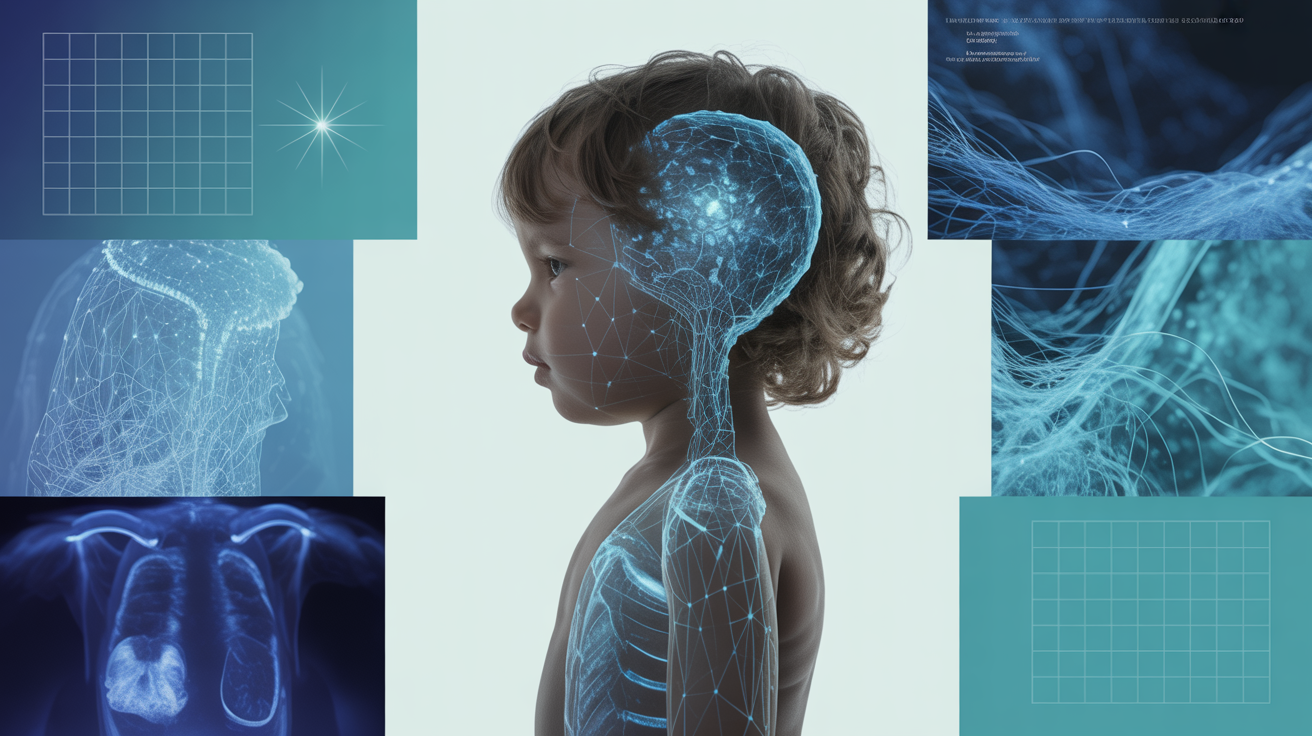
There are over 1,100 FDA-cleared radiology AI devices on the market today. They can detect strokes, flag fractures, triage pulmonary embolisms, and identify cancers on imaging. The technology is remarkable — and it's advancing fast.
But there's a problem hiding in plain sight: 83% of these devices have no pediatric labeling whatsoever. Only 3% indicate any pediatric intent. And when adult-trained algorithms are tested on children, detection sensitivity can drop to as low as 26%.
That's not a rounding error. That's a patient safety crisis waiting to happen.
The Numbers Don't Lie
The ACR Pediatric AI Workgroup published a landmark white paper documenting what many pediatric radiologists have long suspected: AI devices trained on adult populations perform significantly worse on pediatric cases.
The data is stark:
- 83% of FDA-cleared radiology AI devices carry no pediatric labeling
- Only 3% indicate pediatric-specific intent
- Detection sensitivity in children drops to 26–68% (versus 68–100% in adults)
- There are 73 million children in the United States alone
These are not abstract numbers. They represent real children walking into emergency departments and imaging centers where AI triage systems are increasingly influencing clinical decisions — systems that were never designed with their anatomy, their diseases, or their developmental biology in mind.
Why Adult AI Fails on Children
The fundamental issue is straightforward: children are not small adults.
Pediatric imaging differs from adult imaging in ways that are invisible to anyone without years of dedicated fellowship training:
- The thymus — a normal structure in children — can mimic a mediastinal mass on chest X-ray and confuse AI systems trained on adult anatomy where the thymus has involuted
- Growth plates in developing bones can be misidentified as fractures by algorithms trained on mature skeletal anatomy
- Brain myelination patterns change dramatically in the first years of life — what looks abnormal in an adult is entirely normal in a 6-month-old
- Disease presentations differ — pediatric cancers, congenital anomalies, and inflammatory conditions look fundamentally different from their adult counterparts
- Body proportions change yearly — organ sizes, anatomical relationships, and normal variants evolve throughout childhood in ways that adult-trained models simply cannot account for
An AI model that has never seen a normal pediatric thymus will flag it as pathology. An algorithm trained on adult fracture patterns will miss the subtle buckle fracture or greenstick fracture that is classic in children. A chest X-ray AI that doesn't understand pediatric airways will miss a subtle foreign body aspiration.
I was subcontracted as a radiologist to help train a large AI model for one of the world's leading AI companies. During that engagement, I witnessed firsthand that many pediatric cases were being systematically avoided by other radiologist subcontractors who lacked formal fellowship training in pediatric radiology. This experience highlights why many models perform poorly in pediatric populations: no algorithm can outperform the quality of the data on which it is trained.
The Regulatory Landscape Is Shifting
Regulators are waking up. The EU AI Act now mandates testing on affected populations — and children are undeniably an affected population for any radiology AI deployed in a general hospital setting. The FDA's evolving framework for AI/ML-based medical devices is increasingly scrutinizing population-specific validation.
A multi-society statement endorsed by six international pediatric radiology societies — the ACR, ESPR, SPR, SLARP, AOSPR, and SPIN — has called for pediatric-specific safety ratings, diverse pediatric datasets, transparent metrics, and explainable models.
The message is clear: the days of deploying adult-trained AI in pediatric settings without validation are numbered.
What AI Companies Should Do About It
If your company builds radiology AI, here's the uncomfortable truth: your product almost certainly has a pediatric gap. The question is whether you'll address it proactively — or wait until a regulator, a hospital procurement committee, or an adverse event forces your hand.
The path forward requires:
- Pediatric-specific training data — annotated by fellowship-trained pediatric radiologists, not general radiologists or crowd-sourced labelers
- Age-stratified validation — testing your model across neonates, infants, toddlers, children, and adolescents separately, because a 2-month-old and a 15-year-old have almost nothing in common radiologically
- Subspecialist expertise in your pipeline — someone who understands that the growth plate is not a fracture, the thymus is not a tumor, and the unmyelinated brain is not damaged
- Regulatory preparedness — documentation of pediatric testing that will withstand FDA scrutiny and EU AI Act compliance requirements
The Opportunity
Here's the flip side: the companies that solve this first will own the pediatric AI market.
Children's hospitals are the most prestigious institutions in healthcare. Their procurement committees are rigorous, their requirements are exacting, and their influence on the broader market is disproportionate. An AI company that can demonstrate validated pediatric capabilities will have a decisive competitive advantage in every RFP, every FDA submission, and every hospital system negotiation.
The pediatric radiology AI market is projected to grow as part of a broader imaging AI market expected to reach $7.2 billion by 2035. The companies that invest in pediatric validation now will be positioned to capture this growth. Those that don't will find themselves locked out of children's hospitals — and increasingly, out of general hospitals that serve mixed populations.
Why NeuraTots Exists
NeuraTots was founded to close this gap. We are the first and only consultancy dedicated exclusively to pediatric radiology AI — providing the fellowship-trained subspecialist expertise that AI companies need to build products that are safe, accurate, and clinically valid for children.
If your AI touches children's imaging — or if it might be used in a setting where children are present — we should talk.
Dr. Rotimi Komolafe
Founder & Principal Consultant, NeuraTots
North American fellowship-trained pediatric radiologist. Published AI researcher and expert AI/Radiomics peer reviewer for the Journal of Pediatric Radiology.