Children Are Not Small Adults — Why Adult-Trained AI Fails on Kids
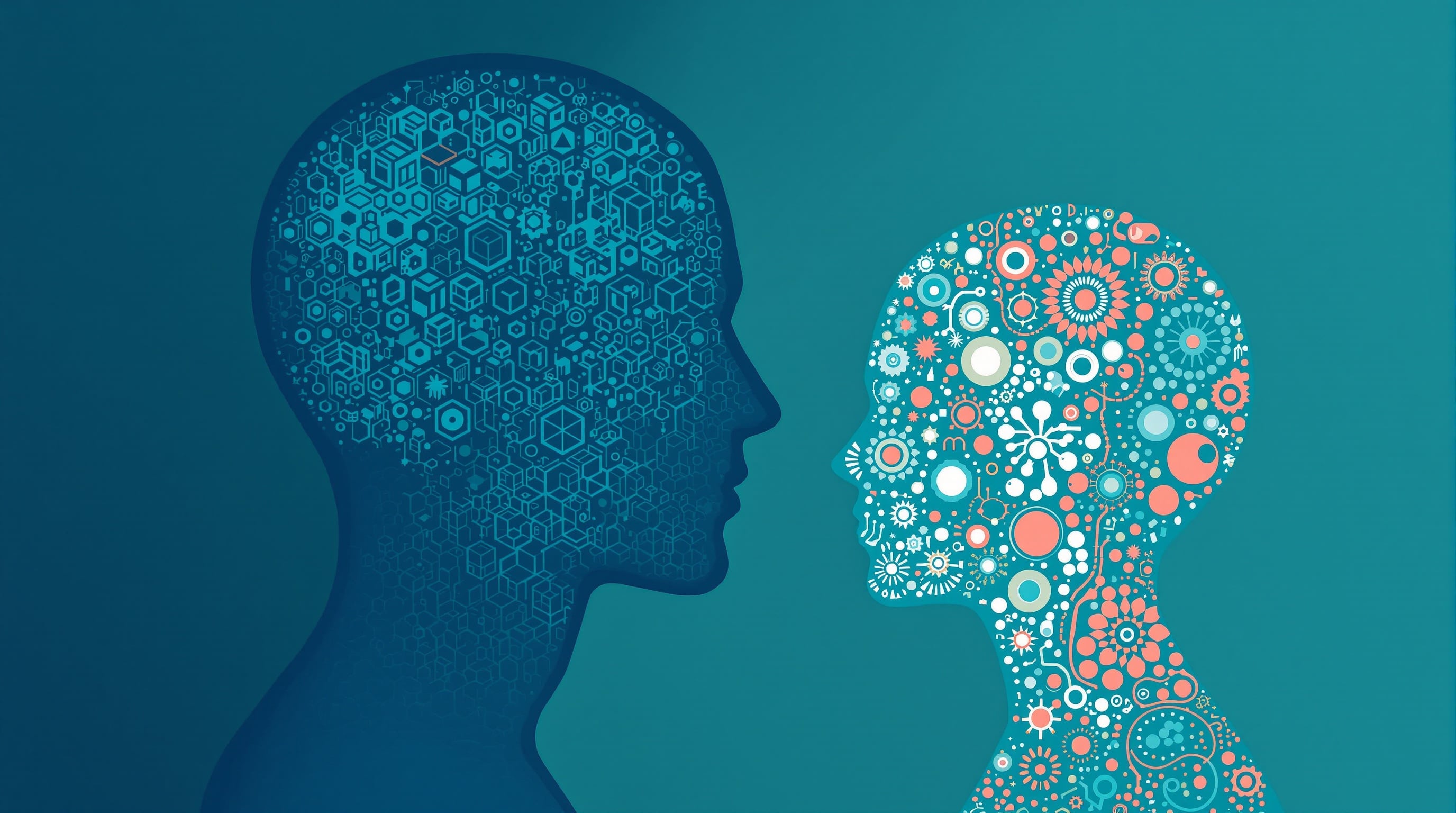
In medicine, there is a phrase so foundational it is taught in the first week of every pediatric rotation: children are not small adults. It is the single most important principle in pediatric care — and it is the one that most radiology AI completely ignores.
The consequences are not theoretical. They are measurable, clinical, and growing more dangerous by the day as AI-assisted imaging becomes standard practice in hospitals that serve both adults and children.
The Anatomy Is Different
A child's body is not a miniature version of an adult's. It is a fundamentally different biological system — one that changes dramatically from birth through adolescence. These differences are not subtle refinements. They are structural, physiological, and radiological.
- The thymus is large and prominent in infants and young children, sitting right in the anterior mediastinum. On a chest X-ray, it can look like a mass to any system — or any radiologist — trained exclusively on adult anatomy, where the thymus has long since involuted. This is one of the most common sources of false positives in pediatric chest AI.
- Growth plates (physes) are open, radiolucent lines running through developing bones. To an adult-trained fracture detection algorithm, they look exactly like fractures. Meanwhile, the actual pediatric fracture patterns — buckle fractures, greenstick fractures, plastic bowing deformities — are subtle findings that adult models have never been taught to recognize.
- Brain myelination follows a predictable but dramatic progression over the first two years of life. The unmyelinated brain of a neonate looks strikingly different from an adult brain on MRI. An AI system trained on adult neuroimaging will interpret normal neonatal white matter as pathological — because in an adult, it would be.
- Organ proportions shift throughout childhood. The liver is proportionally larger in infants, the kidneys are lobulated in young children, and the heart-to-thorax ratio is wider in neonates. Measurements and normal ranges that work for adults are clinically meaningless in pediatric patients.
None of this is new knowledge. Pediatric radiologists spend an additional year of dedicated fellowship training after residency specifically to understand these differences. But most AI has never had the equivalent education.
The Diseases Are Different
It is not just anatomy that differs. The diseases themselves are fundamentally different in children.
- Pediatric cancers are biologically distinct from adult cancers. Neuroblastoma, Wilms tumor, and hepatoblastoma have no adult equivalent. Lymphomas in children behave differently from adult lymphomas. An AI system trained to detect adult malignancies will miss pediatric tumors entirely — or misclassify them.
- Congenital anomalies — from congenital diaphragmatic hernias to intestinal malrotation to complex cardiac defects — are conditions that AI encounters almost exclusively in pediatric populations. Adult-trained models have no framework for these findings.
- Infectious patterns differ by age group. Round pneumonia, a classic pediatric presentation that mimics a mass on imaging, is almost never seen in adults. Bronchiolitis, croup, and epiglottitis present with imaging characteristics that have no adult parallel.
- Non-accidental trauma (child abuse) produces specific injury patterns — classic metaphyseal lesions, posterior rib fractures in infants, subdural hematomas with retinal hemorrhages — that require specialized radiological training to identify. Missing these findings has life-or-death consequences.
An AI system that has never encountered these entities cannot detect them. Worse, it may generate false confidence by producing "normal" readings on studies that a trained pediatric radiologist would immediately flag.
The Imaging Is Different
Pediatric imaging also follows different technical standards and protocols:
- Radiation dose is a critical concern. Children are more radiosensitive than adults, and pediatric protocols use significantly lower doses, resulting in noisier, lower-contrast images. AI models trained on high-dose adult CT scans perform poorly on the lower-signal pediatric studies they actually encounter in practice.
- Sedation and motion artifacts are common in young children who cannot hold still for imaging. AI systems must be robust to these artifacts — but models trained on cooperative adult patients have never learned to compensate for them.
- Ultrasound is the first-line modality for many pediatric indications where CT or MRI would be used in adults. Appendicitis, pyloric stenosis, intussusception, and hip dysplasia are all diagnosed primarily with ultrasound in children — a modality that most adult-focused radiology AI companies have deprioritized.
- Age-specific normal values are essential. A thymus that is normal at age 2 would be abnormal at age 20. A kidney measuring 7 cm is normal for a 5-year-old and pathologically small for an adult. Without age-calibrated reference ranges, AI measurements are clinically useless.
What Happens When Adult AI Meets a Pediatric Patient
The failure modes are predictable and well-documented:
- False positives — normal pediatric structures (thymus, growth plates, developing ossification centers) are flagged as pathology, triggering unnecessary follow-up imaging, biopsies, or parental anxiety
- False negatives — genuinely abnormal pediatric findings (subtle fractures, congenital anomalies, early tumors) are missed because the model has no reference for what "abnormal" looks like in a child
- Triage failures — AI-assisted triage systems deprioritize genuinely urgent pediatric cases because the pathology doesn't match adult patterns the system was trained to recognize
- Measurement errors — organ sizes, bone ages, and developmental metrics are reported against adult norms, producing clinically misleading results
Published research shows that when adult-trained algorithms are tested on pediatric populations, detection sensitivity can drop to as low as 26%. That means nearly three out of four abnormalities go undetected.
The Path Forward
Closing this gap requires more than fine-tuning existing adult models with a handful of pediatric cases. It requires a deliberate, subspecialist-driven approach:
- Purpose-built pediatric training datasets — curated and annotated by fellowship-trained pediatric radiologists who understand the clinical context, age-specific normal variants, and disease-specific presentations unique to children
- Age-stratified development and validation — because a neonate, a toddler, and an adolescent are three radiologically distinct populations, each requiring separate model training and testing
- Pediatric-specific labeling taxonomies — annotation schemas that capture the nuances of pediatric findings, not adult categories retrofitted for children
- Subspecialist quality assurance — every label, every annotation, and every validation step reviewed by radiologists whose entire career is dedicated to pediatric imaging
This is not optional. As regulatory frameworks like the EU AI Act and evolving FDA guidance increasingly require population-specific validation, AI companies that cannot demonstrate pediatric safety and efficacy will face growing barriers to market access.
Why This Matters Now
AI-assisted radiology is no longer experimental. It is being deployed in emergency departments, outpatient clinics, and imaging centers across the world — many of which serve pediatric patients. Every day that adult-trained models are applied to children without proper validation, the risk of misdiagnosis grows.
The solution is not to abandon AI in pediatric imaging. The solution is to build it right — with the subspecialist expertise that this population demands.
Children are not small adults. Their anatomy is different. Their diseases are different. Their imaging is different. Any AI that does not account for these differences is not just suboptimal — it is unsafe.
NeuraTots exists to provide the fellowship-trained pediatric radiology expertise that AI companies need to build products that work for children — not just products that were built for adults and hoped to generalize.
If your AI touches pediatric imaging, the question is not whether you need subspecialist input. The question is how much longer you can afford to go without it.
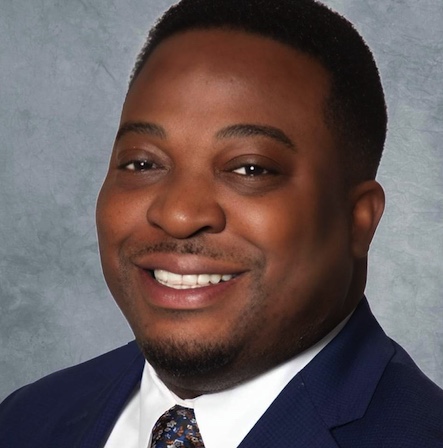
Dr. Rotimi Komolafe
Founder & Principal Consultant, NeuraTots
North American fellowship-trained pediatric radiologist. Published AI researcher and expert AI/Radiomics peer reviewer for the Journal of Pediatric Radiology.